
Report for Members - INSOL TOKYO, 11 to 13 September 2023
05 October 2023
Our Chair, Dr Eric Levenstein and our COO, René Bekker had the privilege of joining approximately 30 South Africans at the recent INSOL Conference held in Tokyo, Japan.
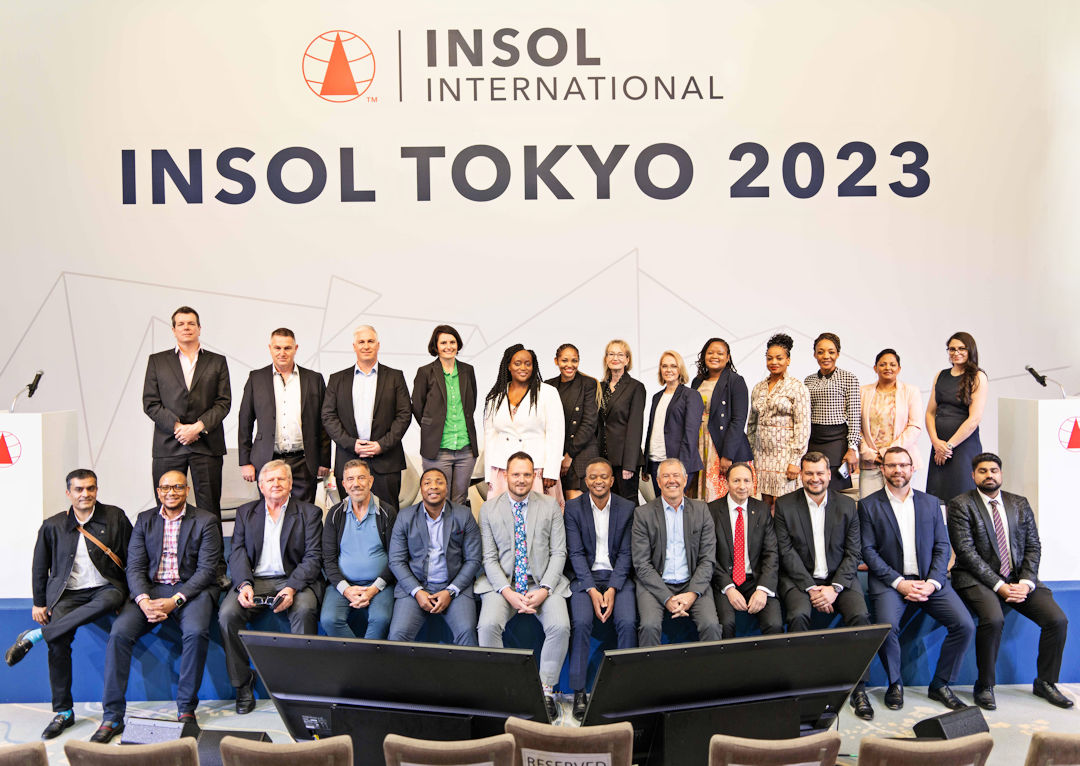
They joined several hundred delegates from around the globe. Delegates travelled to Tokyo from 60 different jurisdictions and delegates included insolvency and restructuring practitioners, lawyers, financial advisors, distressed debt funds, regulators and a number of stakeholders involved in the insolvency and restructuring profession.
INSOL International has approximately 10 000 members from over 70 countries, and where delegates gather once a year to discuss cutting-edge issues involving the insolvency and restructuring profession. SARIPA is the 5th largest member organisation of INSOL International and South African delegates attending the conference (insolvency practitioners and business rescue practitioners) were very much involved in cross-border insolvency discussions and certainly gained a better understanding of how restructuring and insolvency regimes operate in multiple jurisdictions across the globe.
As Chair of INSOL IPG (Insolvency Practitioners Group), Eric led a very engaging session on the future role of the insolvency profession. An issue which is of concern to insolvency practitioners across the globe and in South Africa (and which was discussed at the session) is the ever-increasing level of corporate distress and uncertainty in running insolvency and rescue mandates, which impacts the role of insolvency practitioners (liquidators and business rescue practitioners) and the manner in which they can assist in the restructuring of companies that might be on the brink of insolvency.
Delegates attending the INSOL IPG session, debated the way insolvency practitioners should be approaching their appointments in distressed companies. All agreed that the way insolvency practitioners engage and deal with directors who are increasingly resistant to an intervention is challenging and not for the faint-hearted. The approach to modern-day restructuring of insolvent companies requires a unique skill set on the part of the practitioner and where crisis management and people skills are becoming paramount, if that practitioner wants to successfully restructure a company's affairs, its debt and in order to avoid a full-scale insolvency.
Rene also attended the Membership Association Roundtable which was hosted by Alix & Partners and chaired by Jason Baxter, the CEO of INSOL International. This was a wonderful opportunity for all the leaders of the various international member associations to learn and update one another. The session was very productive and our mentorship programme received a lot of attention, as very few associations have successfully launched mentorship programmes.
At the conference itself, many different topics were debated. The main conference kicked off with a discussion by market experts on the unprecedented and ongoing period of economic volatility the world is experiencing through ongoing inflation, rising energy prices, sovereign debt, and geostrategic developments. The nature and scope of these challenges were discussed and the impact they will have on insolvency filings and the potential for successful restructuring outcomes.
An expert panel discussed the “crypto winter” of the last 12 months which has seen novel insolvency filings such as Voyager Digital, Celsius Network, Zipmex and FTX. Key issues such as collecting and distributing crypto assets, and the regulatory gaps that exist in managing large and complex crypto filings were distilled and discussed.
A panel discussion also debated the way that the proliferation of private credit has created an alternate funding source for performing companies and those companies that are facing special situations, including sustained financial distress. This has opened a new investment avenue for funds across the globe. The discussion explored the growth drivers for this rapidly growing asset class, with a focus on differentiating attributes across the globe.
Environmental, Social and Governance (ESG) concerns have been around for decades yet only in the last decade have these concepts entered everyday parlance. An expert panel unpacked these issues for the delegates. There has been little debate concerning the role that ESG issues may play in the future of restructuring and insolvency. This session highlighted when ESG issues are likely to arise; whether ESG commitments might limit options for restructuring, and whether rescue financing can and should incorporate ESG targets to reach new sources of funding.
Technological and digital advancements (in the main artificial intelligence) are changing the nature of the insolvency and restructuring profession, and the way that IP’s go about their duties and responsibilities. A highly informative panel discussion took place and where speakers explained how companies and businesses have become increasingly reliant on digital assets, complex cloud–based technology and artificial intelligence (ChatGBT). The panel discussed how insolvency investigations in the digital age can be navigated and assets recovered.
Recent cases in the Cayman Islands, Hong Kong, and the United States, along with the new regulatory framework set out in the Model Law on the Recognition and Enforcement of Insolvency Related Judgments, has brought the Gibbs rule back into the limelight. A panel of Judges provided a judicial perspective on the effect of the Gibbs Rule and how it has been applied in cross–border insolvencies.
The conference closed with a session on crystal ball gazing with the panel identifying future trends among disrupted markets, macroeconomic uncertainty, and corporate distress.
All would agree that continued distress and the need for early intervention is a key factor in ongoing restructuring, insolvency and rescue matters that we will have to deal with in the years ahead.
With many corporates globally facing similar challenges as we find in South Africa, and with ever-increasing economic pressure, companies are left with little choice but to consider engaging with professionals to assist them with a formal insolvency (liquidation) or a business rescue process. Clearly, distress remains agnostic and cuts across all sectors of the economy.
In addition to the formal programme, INSOL Tokyo allowed for intensive networking, catching up with international colleagues and making new contacts from various jurisdictions.
All in all, the INSOL Conference in Tokyo, again delivered to the 760 delegates that attended over the three days. The South Africans that did attend, while enjoying the warm weather in Tokyo, and all the sights and sounds of what is a very vibrant city, agreed that attending the conference was extremely rewarding and very worthwhile.
The next INSOL International annual conference will be held in San Diego in May 2024. Don’t miss it!!

Dr Eric Levenstein
SARIPA Chairperson